
The essentials in 30 seconds
- What it does: vitamin D contributes to the maintenance of normal bones, normal muscle function and the normal function of the immune system.
- The issue here: from October to March, the skin makes almost none, and food provides little.
- The dose: 15 µg (600 IU) a day covers an adult's needs. Never exceed 100 µg (4,000 IU) a day.
- Which one: vitamin D3, taken with a meal that contains a little fat.
What exactly is vitamin D?
It is a vitamin apart: your body makes it itself, in the skin, thanks to the sun's UVB rays. In summer, a few minutes outside with arms and face uncovered often cover a good part of your needs. Food provides little: mainly oily fish (salmon, mackerel, sardines, herring), egg yolk and a few fortified products.
Without oily fish several times a week, it is hard to reach 15 µg a day from food alone. In summer, the sun makes up for it. In winter, much less so.
Why winter changes everything in Luxembourg
Luxembourg lies around the 50th parallel. From October to March, the sun stays too low in the sky: its UVB rays, the ones that let the skin make vitamin D, are almost entirely filtered out by the atmosphere. So even outside at noon under a blue sky, the skin makes almost none.
And glass blocks UVB: sunshine through the office or car window does not count. That is why so many people start wondering about vitamin D in autumn.
The right reflex: to know your level, ask your doctor for a blood test. It is the only way to know whether you are really short, and they can adjust the dose.
What does it really do?
You read a lot about vitamin D. In Europe, only effects that are solidly proven may be claimed. Here they are:
Vitamin D contributes to the maintenance of normal bones and normal teeth.
It also contributes to normal absorption/utilisation of calcium and phosphorus, and to normal blood calcium levels.Vitamin D contributes to the maintenance of normal muscle function.
A point of direct interest to athletes.Vitamin D contributes to the normal function of the immune system.
It also has a role in the process of cell division.Let's be honest: if your intake is already sufficient, taking more brings nothing extra. A supplement fills a gap, it does not "boost" beyond it.
What dose, and how to take it?
That is 600 IU, the reference intake set by the European Food Safety Authority for an adult. Supplements often contain 25 to 50 µg (1,000 to 2,000 IU) per serving, well below the limit of 100 µg a day (4,000 IU) not to exceed, all sources combined.
µg or IU: how to read the label?
25 µg = 1,000 IU, 50 µg = 2,000 IU. Both units mean the same thing.
Multivitamins, fortified omega-3, fortified foods: add up everything you take to stay under 100 µg a day.
When?
Vitamin D is fat-soluble: it is better absorbed with a little fat. Take it with a meal, lunch or dinner, it does not matter. What counts is regularity, every day from autumn to the end of winter.
All year round?
Not necessarily. Many people take it from October to March, then stop when they enjoy the sun again. If you rarely go out, have darker skin or are over 65, talk to your doctor: your needs may be different.
D3, D2, with K2 or magnesium… which one to choose?
Cholecalciferol, the form your skin makes in the sun. It is the one in the vast majority of supplements.
Ergocalciferol, from yeast or mushrooms. If you are vegan, look rather for a D3 made from lichen.
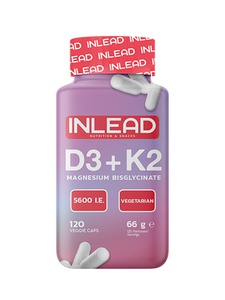
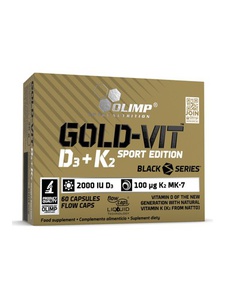
Vitamin K contributes to the maintenance of normal bones, like vitamin D. If you take anticoagulants, ask your doctor before taking it.
Magnesium contributes to normal muscle function and to the reduction of tiredness and fatigue. A handy combination in a single serving.
Capsules, drops or tablets?
The Tonic Food tip: check the amount of vitamin D per capsule and the number of capsules per pack. A pack of 120 capsules at 50 µg can last the whole winter, and more.
The questions we get in store
Should you take vitamin D in winter in Luxembourg?
From October to March, the skin makes almost none and food provides little. A supplement is a simple way to reach the reference intake of 15 µg a day. To know your actual level, ask your doctor for a blood test.
Can you take too much?
Yes: at very high doses over time, vitamin D builds up in the body. For an adult, do not exceed 100 µg (4,000 IU) a day, all sources combined, unless your doctor advises otherwise. Always follow the dose on the pack.
Does sunshine through a window count?
No. Glass blocks UVB rays, the ones that let the skin make vitamin D. Sunshine behind a window does not count.
D3 or D2, what is the difference?
D3 is the form made by the skin, of animal origin or made from lichen. D2 comes from yeast or mushrooms. D3 is the most used in supplements.
Why combine vitamin D with K2?
Both contribute to the maintenance of normal bones. It is a common combination, not a must. If you take an anticoagulant, ask your doctor before taking vitamin K.
What about children or pregnancy?
Needs and doses are different. The supplements in our selection are meant for adults: for a child or during pregnancy, ask your doctor or pharmacist.

